Quick Answer: For most drivers who can charge at home and drive 10,000 to 20,000 miles a year, buying an EV in 2026 makes strong financial sense. Battery costs are falling, used EV prices have dropped significantly, and real-world data shows EV batteries lasting far longer than most people fear. But it is not the right choice for everyone, and this guide will help you figure out which side you are on.
If you have been putting off the EV decision for another year, you are not alone. Most people are waiting for prices to drop, batteries to improve, or charging to get easier.
Here is the thing: most of that has already happened.
2026 is a genuinely different EV market than even two years ago. Battery technology has improved, used EV prices have fallen hard, and real-world data on battery longevity is finally clear enough to answer the questions people have been asking for years.
This guide cuts through the noise and gives you the real picture, including what nobody tells you about the battery.
What Has Actually Changed for EV Buyers in 2026
A lot has changed quietly while people were waiting.
Battery pack prices hit a record low of $108 per kilowatt-hour in 2025, down 93% from 2010 levels, according to BloombergNEF. That cost reduction flows directly into cheaper EVs and lower replacement costs over time.
Global EV sales crossed 20 million units in 2025, a 20% jump year over year, representing roughly 25% of all new cars sold worldwide according to the IEA Global EV Outlook 2026. The market is no longer a niche. It is mainstream.
Public charging networks grew 28% in 2025 and are on track for 19% further growth in 2026. The charging anxiety that held many buyers back three years ago is genuinely less of a problem today.
The one real change that hurts buyers in 2026 is that the US federal EV tax credit of up to $7,500 expired on September 30, 2025. That stings. But as we will show below, the underlying economics have gotten better anyway.
What the Battery Data Actually Shows in 2026
This is the part most EV buyers worry about most, so let’s deal with it head on.
The single biggest fear is: “What if the battery dies early and wipes out all my savings?”
Real data from over 22,700 EVs tracked by Geotab shows the average battery degradation rate is just 2.3% per year. At that rate, after 8 years your battery still holds around 81% of its original capacity. That is well above the 70% minimum most manufacturers guarantee under warranty.
A 2026 University of Michigan study found that used battery-electric vehicles now have the lowest total cost of ownership among all vehicle types, including gas, hybrid, and plug-in hybrid. That finding only makes sense if batteries are holding up.
Real-world data from 8 to 10 year old EVs shows most retaining 80% to 90% of their original battery capacity, depending on model and usage.
Predictive modeling cited by the US Alternative Fuels Data Center suggests today’s batteries may last 12 to 15 years in moderate climates, and 8 to 12 years in extreme climates.
The battery anxiety that made early EV ownership feel like a gamble is much less justified by the numbers in 2026.
Want to dig deeper into what healthy battery aging looks like year by year? Our guide on what normal EV battery degradation looks like breaks it down with the same Geotab data.
The Real Cost of Owning an EV in 2026
Let’s look at the actual numbers, not just the sticker price.
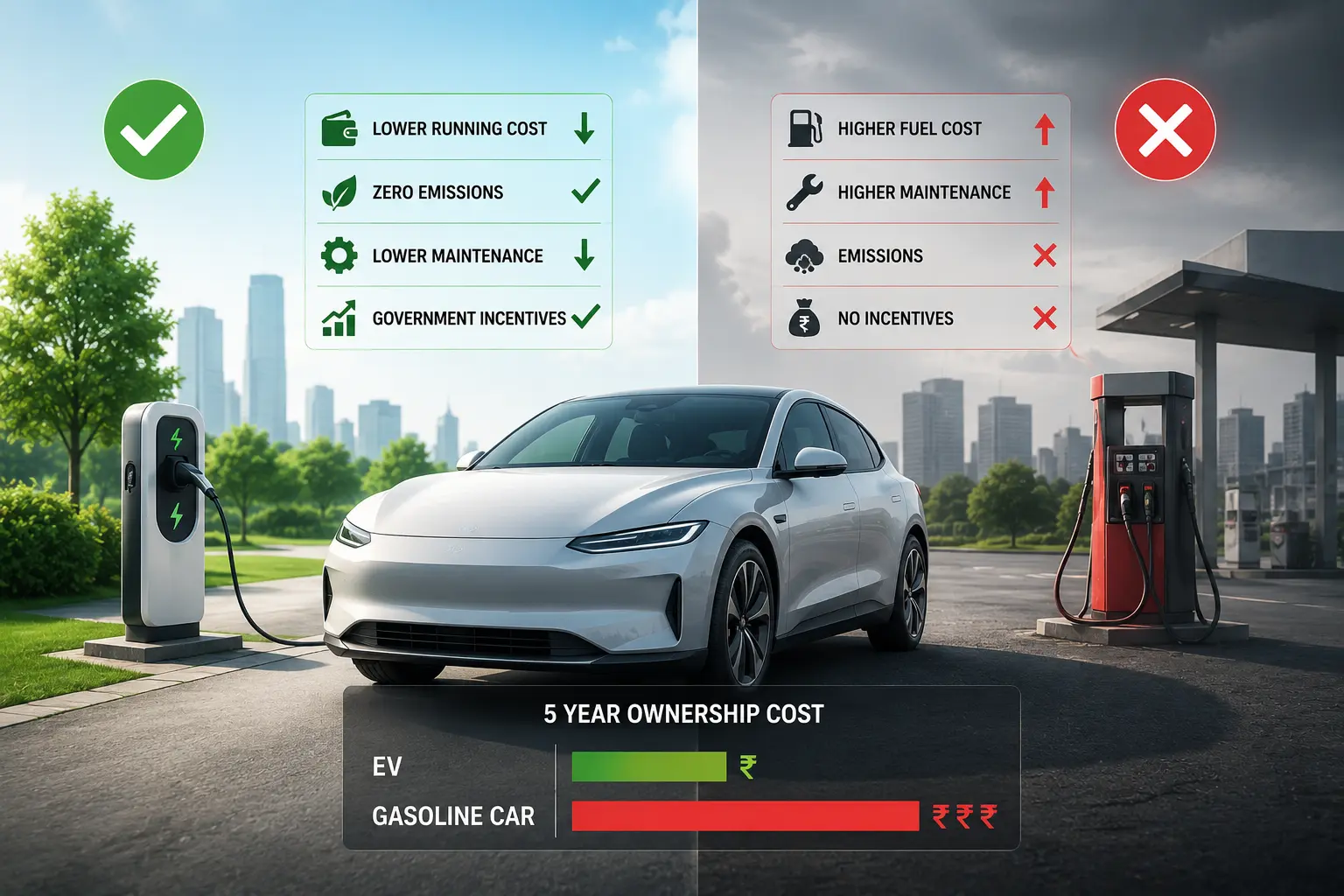
- Fuel savings: EV drivers can save an estimated $7,700 to $14,500 on fuel costs over 15 years compared to a gas car, according to the US Department of Energy. At current electricity rates, the average EV costs around 5 cents per mile to charge versus around 13 cents per mile for a gas car.
- Maintenance savings: An EV motor has around 20 moving parts. A petrol engine has over 2,000. That difference shows up clearly in long-term costs. EV owners typically save up to 50% on maintenance and repair over the life of the vehicle compared to gas car owners. No oil changes, no spark plugs, no timing belts. Brake pads also last longer because regenerative braking does most of the work.
- Purchase price: New EVs still carry a price premium. The average transaction price for an EV in August 2025 was $57,245 versus $49,077 for all cars, according to Kelley Blue Book. Without the federal tax credit, that gap is harder to close upfront.
- The honest total picture: The total cost of ownership may not shift in favour of EVs until around the sixth year of ownership on average. If you are keeping the car for 5 years or less, the numbers are tighter. If you are keeping it for 8 to 10 years, the math usually works clearly in the EV’s favour.
Is a Used EV Worth Buying in 2026
This is where the best value in the 2026 EV market actually sits. Used EV prices have fallen around 15% year over year while gas and hybrid prices barely moved. Average used EV listing prices are now just over $32,000, roughly in line with the broader used car market. More than half of used EVs now sell for under $35,000.
When you buy a used EV, you step in after the steepest depreciation has already hit. You get the same low fuel and maintenance costs. And the battery data on 3 to 5 year old EVs is now strong enough to evaluate with real confidence rather than guesswork.
The catch with used EVs is always the battery. Not every used EV is a bargain. How the previous owner charged the car, the climate it was used in, and whether it relied heavily on fast charging all affect how much life is left in the battery.
Our guide on warning signs your EV battery needs attention is worth reading before you buy any used EV.
Who Should Buy an EV in 2026
The honest answer is that an EV is a great fit for some people and a poor fit for others. Here is a simple way to figure out which side you are on.
An EV likely makes strong sense for you if:
- You can charge at home most nights, even a standard outlet works for most daily commuters
- You drive 10,000 to 20,000 miles a year regularly
- You plan to keep the car for at least 5 to 6 years
- Your daily driving is mostly under 150 to 200 miles
- You are open to a used EV, where the value is strongest right now
An EV may not be the right fit right now if:
- You cannot charge at home and your area has limited public charging
- You drive more than 25,000 miles a year in a way that requires frequent fast charging as your main option
- You need to sell in 3 years or less and want to minimise depreciation risk
- You regularly drive long distances in extreme cold without access to fast charging stops
What About the Battery Warranty
This is one of the most underrated parts of the EV buying decision. Most manufacturers guarantee at least 70% battery capacity for 8 years or 100,000 miles. California mandates 70% capacity retention for 10 years or 150,000 miles on 2026 models.
That warranty means even if your battery degrades faster than average, you have real coverage. If you are buying a used EV that is 3 to 5 years old, a significant portion of that warranty is still active.
Always check the exact warranty terms for your specific model before buying. The coverage details vary between manufacturers and some offer better terms than others. Our EV battery warranty comparison for 2026 covers the major brands side by side.
The One Thing That Changes Everything: Home Charging
If there is a single factor that separates a great EV ownership experience from a frustrating one in 2026, it is home charging.
Owners who charge at home overnight pay far less per mile, stress their battery less by avoiding frequent public fast charging, and never have to think about planning a charging stop for everyday trips.
Owners without home charging depend on public fast chargers for regular use. That means higher charging costs, more wear on the battery over time, and more planning for daily life.
If you are considering an EV but cannot charge at home right now, that is the first problem worth solving before anything else.
The Bottom Line
2026 is a genuinely good time to buy an EV for the right buyer. Battery technology is more reliable than most people realise, used prices have dropped to levels that make the value hard to ignore and real-world ownership data is finally clear enough to make an informed decision.
The federal tax credit is gone and that is a real setback. But for drivers who can charge at home, keep the car for several years, and approach battery health with basic awareness, the economics work.
The question in 2026 is not really are EVs ready. It is am I the right fit for an EV now. If your driving habits, charging situation & timeline line up, the answer is probably yes.
Frequently Asked Questions About Buying an EV in 2026
Q. Is 2026 a good time to buy an EV without the federal tax credit?
A. Yes, for drivers who fit the profile above. The tax credit loss hurts upfront, but battery costs have fallen, used EV prices are down, and total ownership costs over 6 to 10 years still favour EVs for regular commuters with home charging.
Q. How long will an EV battery last if I buy in 2026?
A. Real-world data from over 22,000 EVs shows average degradation of 2.3% per year. Most batteries are expected to last 12 to 15 years in moderate climates. The 8-year manufacturer warranty provides a safety net for the early years.
Q. Is it better to buy a new or used EV in 2026?
A. For most budget-conscious buyers, a used EV from 2021 to 2023 offers the best value right now. You avoid the steepest depreciation, a significant portion of the battery warranty is still active, and prices are down significantly from two years ago.
Q. Does the battery chemistry matter when buying an EV?
A. Yes. LFP batteries, used in many Tesla Model 3 and Y variants and most BYD vehicles, are generally more durable for daily charging and can routinely charge to 100%. NMC batteries, used in higher-performance models, are best kept to 80% for daily use. Knowing which chemistry your car has affects how you should charge it.
Q. What is the biggest mistake EV buyers make in 2026?
A. Buying without checking battery health on a used EV, or buying without reliable home charging access. Both problems are avoidable with a little preparation before signing anything.

Jamie Carter is an EV enthusiast and independent researcher who has been following electric vehicle technology since 2019. After buying her first EV and spending years digging through manufacturer data, owner forums, and industry reports to answer her own questions, she started sharing what she learned. At EV Battery Central, Jamie writes research-backed guides on battery health, charging habits, and EV ownership & more.