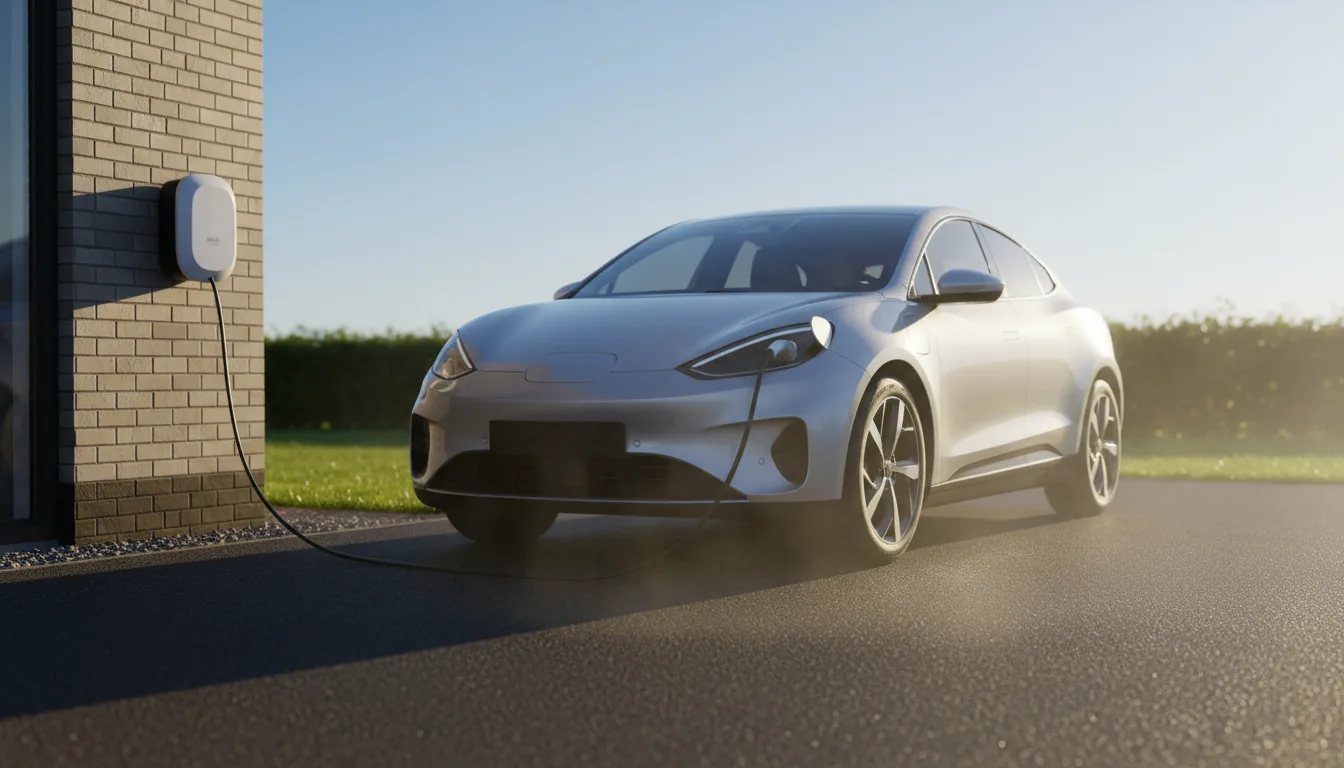
Quick Answer: Yes, heat ages an EV battery faster, but less than most owners fear. Geotab’s analysis of more than 22,700 EVs found that vehicles in hotter regions degraded about 0.4% per year faster than those in milder conditions, and that frequent high-power DC fast charging mattered more than climate. You can protect your battery with a few simple habits: park in shade, charge in the cooler hours, avoid sitting at 100% in the sun, and go easy on fast charging.
If you live somewhere hot, it is natural to worry. Summer pavement, a car baking in a car park, a charger that suddenly slows down: all of it feels like it must be hurting the most expensive part of your car.
The honest answer sits in the middle. Heat is a real factor, but it is one you can manage, and it is not the biggest one. Here is what the data shows and what to do about it.
Does Heat Actually Damage an EV Battery?
Heat speeds up the unwanted chemical reactions that slowly wear a lithium-ion cell down. Recurrent explains that excess heat accelerates the reactions that drain active lithium, which is what shows up over the years as lost capacity. Our guide to EV battery degradation covers what normal loss looks like.
The risk depends a lot on how the car manages temperature. Many modern EVs actively cool the pack, which keeps cells in a safe range even on hot days (see our explainer on EV battery cooling). Cars without active cooling, such as older Nissan Leafs, are the most exposed.
What the Real-World Data Says
Two large data sets give the clearest picture:
- Geotab (reported January 2026): across more than 22,700 EVs from 21 makes and models, average degradation was 2.3% per year, up from 1.8% in its 2024 analysis. Vehicles in hotter regions lost about 0.4% per year more than those in milder conditions. Motor Finance reported the findings.
- Recurrent (2023, Teslas): cars in cold and marine climate zones generally had higher Range Scores than those in hot zones. Northern US states averaged 95 and southern states 92. Recurrent put the point where degradation accelerates at about 30°C (86°F). Drive Tesla Canada summarised the study.
To put the Geotab numbers in perspective, here is a simple straight-line example over eight years. It assumes, purely for illustration, that a car in a milder climate loses 2.3% of its capacity per year. Real batteries do not lose capacity in a perfectly even line, so treat it as a rough guide only:
- Milder climate (2.3% per year in this example): about 18% capacity lost after 8 years.
- Hot region (0.4% per year faster, so 2.7% per year): about 22% capacity lost after 8 years.
That is a gap of a few percentage points, not a battery failure. Most EV batteries carry warranties that cover far more serious loss, which we compare in our EV battery warranty comparison.
Heat vs Fast Charging: Which Matters More?
In the same Geotab data, charging power had a bigger effect than climate. Vehicles that frequently used DC fast charging above 100 kW degraded at up to 3.0% per year, compared with about 1.5% for vehicles charged mainly on AC or lower-power chargers. Geotab’s own analysis found that for vehicles in hot or seasonal climates, degradation was strongly linked to how often they used DC fast charging.
The practical message: if you live in a hot place, the best thing you can do is not rely on fast chargers for everyday charging. We cover that trade-off in Is Fast Charging Bad for EV Battery?
How Hot Is Too Hot?
Kelley Blue Book notes that EV batteries typically perform best between 68 and 86°F (20 to 30°C), which lines up with Recurrent’s 30°C threshold. Above that range, the car’s battery management system may reduce charging current to protect the cells. This is called thermal throttling, and it is why a fast charger can feel slower on a very hot afternoon.
Heat also cuts your driving range, mostly because the air conditioning works harder. Kelley Blue Book cites studies putting the loss at up to 30% in extreme heat. That is a temporary effect on range, not permanent damage, and it returns when temperatures drop.
Charging in Hot Weather: Habits That Help
- Charge in the cooler hours. Early morning or late evening is easier on the battery and, with Level 2 overnight charging, often cheaper too.
- Set an 80% limit for daily use. InsideEVs recommends an 80% cap for both home and fast charging to limit heat build-up. It is enough for most days, and charging slows a lot above 80% anyway.
- Prefer Level 1 and Level 2 over DC fast charging. Slower charging generates less heat in the pack.
- Precondition while plugged in. Cooling the cabin from the grid, not the battery, protects your range. Here is how to precondition your EV battery.
- Choose a shaded charger. It keeps both the cabin and the battery cooler while you wait.
- Give a hot battery a break. If charging is throttled after a long, hot drive, a short pause lets the pack cool.
Parking in Hot Weather
Recurrent’s advice for hot days is to park in a garage or shade. If you cannot, reflective window covers help: Kelley Blue Book notes they reduce air conditioning use and can save a few miles of range.
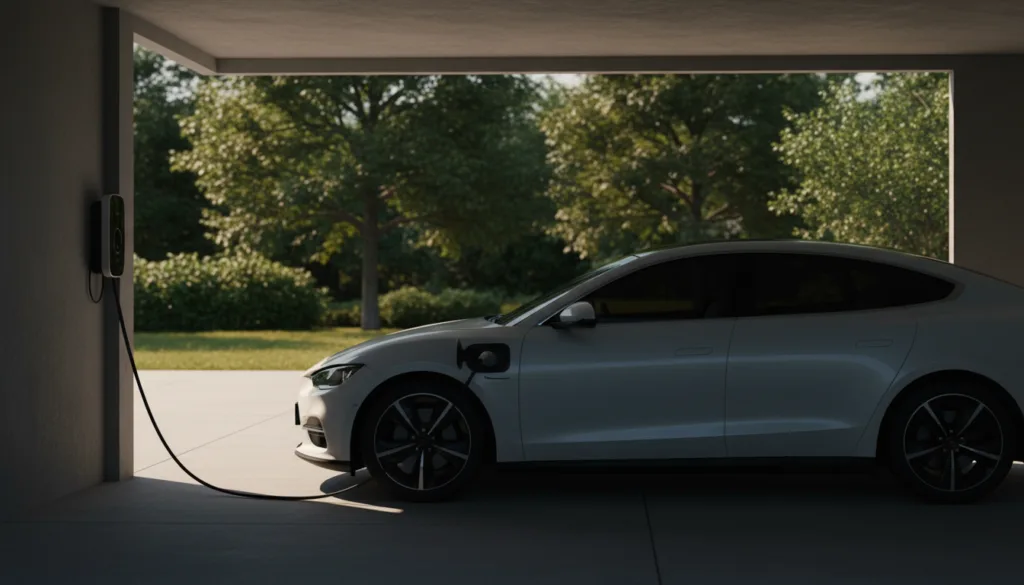
If you are leaving the car parked in the heat for days, Recurrent also suggests keeping the battery at around 50% rather than sitting full. For longer storage, see our guide on how to store your EV without damaging the battery.
Does Battery Chemistry Matter in the Heat?
It can. Recurrent notes that LFP battery packs tolerate high temperatures well, which is one reason many owners in hot regions look for them. Our comparison of LFP vs NMC batteries explains the other trade-offs.
Hot-Weather Habits at a Glance
| Habit | Why it helps |
|---|---|
| Park in shade or a garage | Keeps the pack out of the 30°C+ zone where degradation speeds up |
| Charge at night or early morning | Lower ambient temperature means less heat during charging |
| Cap daily charging at 80% | Reduces time spent at high charge and limits heat build-up |
| Limit DC fast charging | High-power charging showed the largest degradation effect in Geotab’s data |
| Precondition on the plug | Cools the cabin using grid power, not battery power |
The Bottom Line
Heat does age an EV battery faster, but in the largest recent data set the extra loss was about 0.4% per year, smaller than the effect of frequent high-power fast charging. You do not need to avoid summer driving or worry about every hot day. Park smart, charge in cooler hours, keep daily charging to around 80%, and use fast chargers when you need them rather than by habit.
Frequently Asked Questions About Heat and EV Batteries
Q. Does heat permanently damage an EV battery?
A. Heat speeds up normal ageing, which does cause permanent capacity loss over time. In Geotab’s data of more than 22,700 EVs, hotter regions lost about 0.4% per year more than milder ones, so the effect is real but modest.
Q. What temperature is bad for an EV battery?
A. Recurrent put the point where degradation accelerates at about 30°C (86°F). Kelley Blue Book says batteries typically perform best between 68 and 86°F.
Q. Is it okay to charge an EV in hot weather?
A. Yes. Charging in the cooler parts of the day, using Level 2 where possible and stopping at around 80% for daily use, keeps heat to a minimum. In very hot conditions your car may slow charging to protect the battery.
Q. Should I park my EV in the sun?
A. Shade or a garage is better. If you cannot avoid the sun, use a reflective sunshade. For multi-day parking in heat, Recurrent suggests leaving the battery at around 50%.
Q. Does hot weather reduce EV range permanently?
A. No. Range loss in hot weather is mainly from air conditioning use, and Kelley Blue Book cites losses of up to 30% in extreme heat. It returns when temperatures drop. Permanent capacity loss is a separate, slower process.
Q. Are some EVs better in hot climates?
A. Cars with active battery cooling cope best, and Recurrent notes that LFP packs tolerate high temperatures well. Check your model’s battery warranty, which usually applies regardless of climate.
Sources
- Motor Finance: Geotab data points to modest rise in EV battery degradation as fast charging use grows (January 2026)
- Geotab: EV Battery Health Insights
- Drive Tesla Canada: Study reveals living in a colder climate may be better for your Tesla battery health (September 2023)
- Kelley Blue Book: 9 Tips for Driving and Charging an EV in Hot Weather (March 2025)
- InsideEVs: Beat the Heat: Best EV Charging Practices for Summer (June 2024)

Jamie Carter is an EV enthusiast and independent researcher who has been following electric vehicle technology since 2019. After buying her first EV and spending years digging through manufacturer data, owner forums, and industry reports to answer her own questions, she started sharing what she learned. At EV Battery Central, Jamie writes research-backed guides on battery health, charging habits, and EV ownership & more.