Electric cars are taking over the roads and revolutionizing transportation. Did you know that the number of electric vehicles on the road worldwide is projected to exceed 250 million by 2030? The world is evolving towards sustainable transportation, and EV batteries determine everything from charging speed and driving range to lifespan, safety, and overall vehicle performance.
An EV battery stores and delivers energy to keep the vehicle moving. However, not all EV batteries are the same. Each battery type offers different trade-offs in performance, lifespan, cost, safety, and charging behavior. If you’re considering an electric vehicle, you might be wondering how these batteries work. While lithium-ion batteries currently dominate the EV market, there are other battery types worth considering.
In this guide, you will explore each battery type in detail along with their features. So, keep reading.
Table of Contents
ToggleWhich EV Battery Type is Best for Your Car? [Video]
EV batteries come in various types, each with different charging speeds, lifespans, and costs. Watch this video to learn quick breakdown to understand the best option for your needs!
The The type of battery used in an electric vehicle is not just a technical specification. It is crucial in everyday living, from driving to maintenance. Different battery types have different strengths, and choosing the right one makes a significant difference. Here’s why understanding EV battery types matters:
Driving range and performance
The battery determines the distance an EV can go on a single charge. Some batteries store more energy and let you travel longer distances. On the other hand, others may drain faster. Lithium-ion batteries are popular as they provide a strong balance between energy density, range, and vehicle weight. A better battery means fewer charging stops and a blissful driving experience.
Charging speed
The charging speeds vary across different EV battery types. Some battery types support DC fast charging, allowing 0 to 80% charging in around 30 minutes under ideal conditions. Fast-charging batteries make EVs more convenient for long road trips. However, they can also wear out easily. So choose the right kind of battery to quickly get back on the road.
Battery lifespan and cost
Batteries do not last forever, and different battery types degrade at different rates. Some can handle multiple charge cycles before losing capacity. On the other hand, others tend to wear out sooner. A longer-lasting battery reduces replacement frequency, lowering long-term ownership costs.
Safety and stability
Some batteries are stable and reduce risk of thermal runaway, overheating or fire. Advanced battery technology comprises safety features, helping manage temperature and prevent short circuits. Choosing a safer battery type protects the car and gives you peace of mind.
Comparison of Different Electric Car Battery Types: A Quick View
| Battery Type | Energy Density | Charging Speed | Lifespan (Charge Cycles) | Cost | Safety | Common Usage |
|---|---|---|---|---|---|---|
| Lithium Ion (Li-ion) | High | Fast | 1000-3000 cycles | Expensive | Moderate (risk of overheating) | Most modern EVs |
| Nickel-metal Hydride (NiMH) | Moderate | Moderate | 500-1000 cycles | Moderate | High (less overheating risk) | Hybrids, some EVs |
| Lead-Acid | Low | Slow | 300-500 cycles | Cheap | High (but bulky and low efficiency) | Auxiliary power in EVs, not for main propulsion |
| Solid-state | Very high | Very fast | 5000+ cycles (estimated) | Expensive (still in development) | Very high (safer than Li-ion) | Future EVs |
| Lithium Iron Phosphate (LFP) | Moderate | Moderate | 2000-5000 cycles | Lower than regular Li-ion | Very high (stable and fire-resistant) | Budget EVs, buses, and energy storage |
Different Types of EV Batteries:
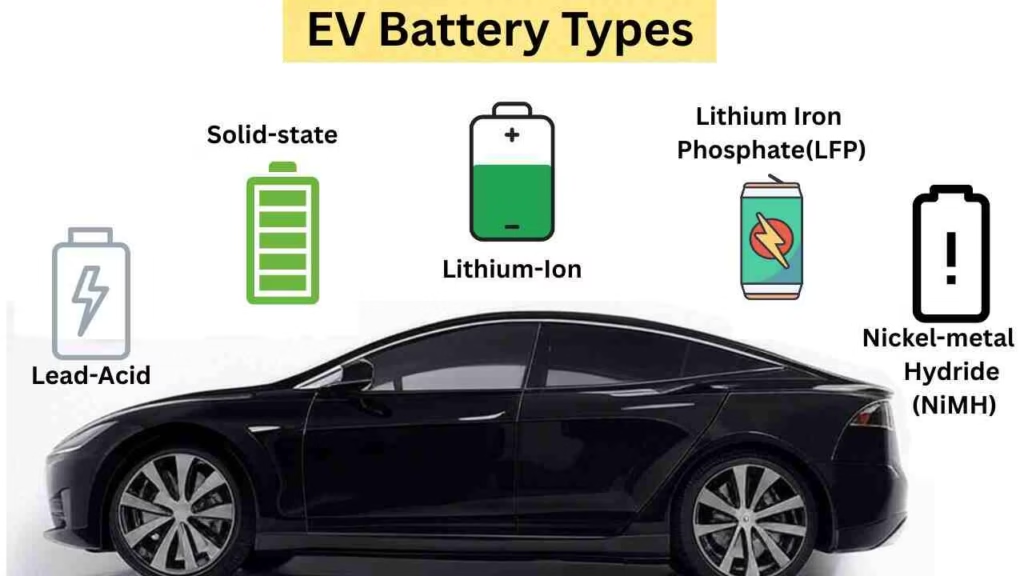
Lithium-Ion (Li-ion) Batteries
This is the most common type of battery, as it offers a great balance of energy density, efficiency, and lifespan. These are used in most modern EVs. These have become the current industry standard for EVs, offering faster charging, longer lifespan, and better performance as compared to older battery types.
This type strikes a balance successfully between weight and power, making EVs more efficient. However, lithium-ion batteries gradually degrade due to extreme temperatures, high charging stress, and frequent fast charging. The technology continues to evolve with an aim to bring us closer to longer-lasting batteries.
Why Li-ion batteries are popular?
- Stores more power in a small, lightweight battery
- Lasts between 8-15 years or 100,000-200,000 miles before degradation
- Compatible with Level 3 DC fast chargers
- Does not need regular fluid refills like older battery types
Nickel-Metal Hydride Batteries
NiMH or Ni–MH is primarily used in hybrid vehicles and are more durable as compared to lead-acid. Nickel-metal hydride batteries offer better longevity as compared to nickel-cadmium batteries and are more environmentally friendly as they do not comprise toxic cadmium.
They are known for excellent durability and reliability, especially in hybrid vehicles, which makes them stand out among other batteries. They can withstand several charge cycles and extreme temperatures better. However, these are less efficient than Li-ion as they have lower energy density and store less power.
Why Ni–MH batteries are used in hybrid car?
- Can last up to 15 years if maintained properly
- Works well in hot or cold climates
- Environmentally friendly and do not rely on cobalt-based chemistries, making them relatively more environmentally friendly.
Lead-Acid Batteries
Lead-acid batteries are one of the oldest rechargeable battery technologies and are commonly used in traditional gasoline cars for lighting, starting, and ignition. The biggest advantage is affordability, as they are cheaper to produce than lithium-ion or nickel batteries.
They are highly recyclable, with over 95% of lead-acid batteries typically recovered. However, this technology is heavy, low in energy density, and used for auxiliary functions instead of powering EVs. They have a shorter lifespan and do not perform well in extreme temperatures.
Why Lead–acid batteries are still popular?
- They are much cheaper as compared to Li-ion
- Being fully recyclable, they are environmentally friendly
- Largely used in golf carts, forklifts, and backup power systems
Solid-State Batteries
Solid-state batteries represent major breakthroughs in EV battery technology and promise to take the industry to new heights. Solid-state batteries replace the liquid electrolyte with a solid electrolyte, improving safety and energy density.
This switch is helpful in making it safe, efficient, and high performing. Overall, these are the new-age batteries that promise higher energy density, faster charging, and better safety. However, this is still in its development stage.
Why Solid-state batteries (SSB) are popular?
- They store more energy in less space
- Have better ion conductivity
- As they use solid electrolytes, there is no risk of leaks
Also, Check out our detailed comparison of Lithium-Ion vs. Solid-State batteries to see which one leads the future of EVs!
Lithium Iron Phosphate Batteries
LFP batteries promise exceptional safety, long lifespan, and affordability. Unlike nickel-based lithium-ion batteries (such as NMC or NCA), LFP batteries rely on iron and phosphate and contain no nickel or cobalt. Its biggest strength is thermal stability and is less likely to catch fire.
They also last longer and are affordable in nature, making them more popular. However, they have shorter driving ranges, though advancements are in place to help close the gap.
Why LFP batteries are popular?
- Not prone to getting overheated or catching fire
- Equipped to handle more charge cycles
- Uses iron and phosphate, which are cheaper and widely available
- Performs well in all temperatures, including hot climates
Conclusion
EV batteries have evolved, with technology improving every other day. Among all the different types of EV batteries, lithium-ion batteries dominate the EV battery market, as they are highly stable, efficient, and last longer, but solid-state batteries may outperform them soon as they are the future.
Solid-state batteries are gaining attention for their potential safety improvements and performance advantages, though affordability remains a future goal. Nickel-metal hydride batteries still are a popular choice for hybrids. On the other hand, lead-acid batteries, although outdated, serve significant roles.
After assessing the comparison of different battery types for electric vehicles, choosing the right battery type ultimately depends on your priorities including range, safety, cost, or longevity. So, whether it is safety, affordability, or longevity, pick your preferred battery type. As the tech evolves, EVs will get better, more sustainable, and longer lasting. The future promises to be exciting, and it is just the beginning.
FAQs
Which type of EV battery offers the longest lifespan?
LFP batteries offer the longest lifespan, often lasting 2000–5000 charge cycles. Solid-state batteries are expected to last even longer once commercially available.
Do different EV battery types affect driving range?
Yes, battery type impacts driving range. Lithium-ion and solid-state batteries offer higher energy density, so longer range, while LFP and lead-acid batteries typically provide shorter driving ranges.
Which EV battery type is the consider safe?
LFP and solid-state batteries are considered the safest battery due to their high thermal stability and lower risk of fire compared to conventional lithium-ion batteries.
Which EV battery type lasts the longest?
Among currently available EV battery types, LFP (Lithium Iron Phosphate) batteries last the longest, typically delivering 2000–5000 charge cycles. Solid-state batteries, once commercially available, are expected to offer an even longer lifespan, potentially exceeding 5000 charge cycles.